

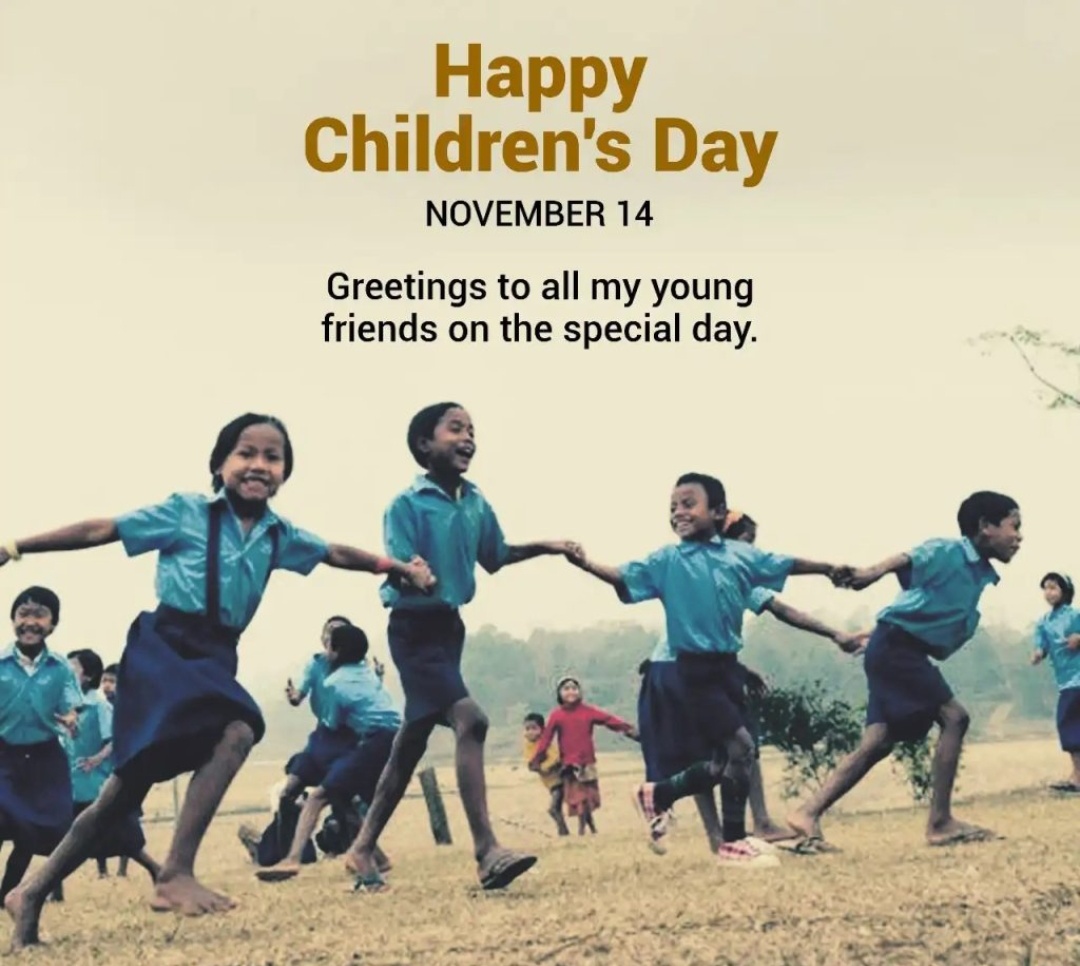
Children’s Day in India is celebrated every year on November 14. It is observed on the birth anniversary of Jawaharlal Nehru, the first Prime Minister of India. Nehru had immense love for children, who affectionately called him ‘Chacha Nehru’. The day is meant to raise awareness about children’s rights, education, welfare and to encourage their growth and development.
● History.
Children’s Day in India was first observed in 1948 as ‘Flower Day’ to raise funds for the United Nations. In 1949, it was widely celebrated as Children’s Day. In 1951, following a suggestion by V M Kulkarni, a UN Social Welfare Fellow, Nehru’s birthday was celebrated as Flag Day. The first official Children’s Day was held in 1954, with nearly 50,000 children participating at the National Stadium in Delhi. In 1957, the government officially declared it and issued three commemorative stamps. After Nehru’s death, in 1964, the Parliament unanimously recognized November 14 as Children’s Day. While Universal Children’s Day is observed globally on November 20, India chose Nehru’s birthday for its national celebration.
● Significance.
Children’s Day focuses on children’s rights, education, health and overall welfare. It honors Nehru’s legacy, who regarded children as the future of the nation. Children are an essential part of society, their care and development are vital for national progress. It reminds parents, teachers and policymakers to prioritize children’s well-being and also raises awareness on issues like child labor and inequality. Theme for 2025 ‘For Every Child, Every Right’. This theme highlights education, health and equality for all children.
● Jawaharlal Nehru’s Connection.
Jawaharlal Nehru (1889–1964) had deep affection for children. He believed their innocence and sparkle symbolized the nation’s future. In 1955, he founded the Children’s Film Society of India so that children could see films meant for them. His letters to his daughter Indira Gandhi (Letters from a Father to His Daughter and Glimpses of World History) express humanistic values in a simple, child-friendly manner. Nehru believed that money spent on children’s welfare was a valuable investment for the country.
● Famous Quotes.
‘The children of today will make the India of tomorrow. The way we bring them up will determine the future of the country’.
‘We live in a wonderful world that is full of beauty, charm, and adventure. There is no end to the adventures we can have if only we seek them with our eyes open’.
‘The policy of being overly cautious is the greatest risk of all’.
● Celebrations.
Children’s Day is celebrated with joy and enthusiasm across India. In schools Cultural programs, singing, dancing, skits, drawing competitions, essay writing, and activities related to children’s rights and future. Public events Games, prize distribution, sweets, fairs; some schools declare holidays. Community events Lectures and speeches on children’s education and welfare. In 1957, white pigeons were released in Delhi and one even perched on Nehru’s head.
This day teaches children about joy, creativity, and social values. Even in 2025, it is celebrated traditionally, with a strong focus on children’s rights in line with the year’s theme.