

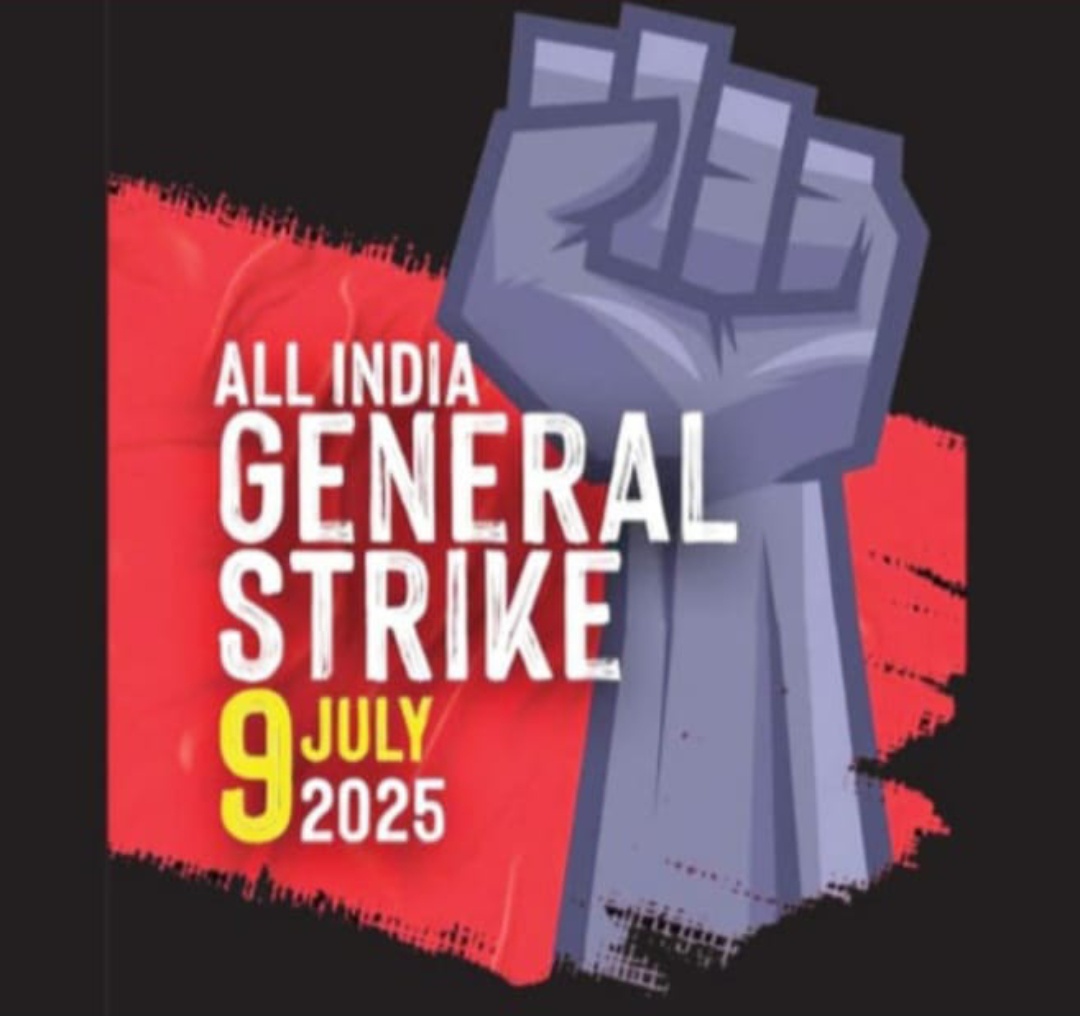
In protest against the BJP led central government’s repeal of 44 labour laws and their replacement with four labour codes, the working class has initiated a nationwide strike on the 9th of this month. Ten central trade unions, independent all-India sectoral federations, and various associations under a joint platform have called for the strike. This is not just another strike like those in the past. It marks a united rebellion by the working class against the Modi government’s decade-long effort to strip workers of their bargaining power and hand them over to the mercy of capitalists. Since coming to power, the Modi government has consistently adopted corporate-friendly and anti-worker policies. As a result, the standard of living for working people has significantly declined. While workers real wages have been decreasing year after year, corporate wealth has skyrocketed.
Between 2014–15 and 2020–21, the rate of wage growth in the organized sector dropped from 10.1% to 6%. Considering the steep rise in inflation, real wages have actually declined further. During the same period, corporate profits rose from 38.7% to 51.9%. According to the World Inequality Report, by 2022–23, the top 1% of the richest in India controlled 22.6% of the national income and held 40.1% of the total wealth, while the bottom 50% owned just 3% of the wealth. These figures and many other official statistics clearly show whose interests government policies are favoring. In this context, the Modi government should be working to increase minimum wages and incomes of the working class. Instead, in the name of international competition, it has launched ‘labour reforms’ that favor investors and work against labourers. The repeal of labour laws and introduction of labour codes is a major move in this direction. These labour codes undermine workers rights to form unions and go on strike basic rights that are essential for protecting wages and working conditions. Like in the United States, they pave the way for a ‘Hire and Fire’ model where employers can hire or dismiss workers at will.
In short, these codes guarantee maximum profits for capitalists by eroding the minimum rights of workers. It’s worth recalling how business leaders like Infosys co-founder Narayana Murthy recently demanded that IT workers should work 72 to 90 hours a week. Even as unorganized sector workers continue to fight for minimum wages, the government ignores them. At the same time, it seeks to strip away hard-won rights of organized sector workers through the new labour codes.
If this continues, inequality, poverty and unemployment in the country will worsen. People’s purchasing power will further decline, slowing down the nation’s overall economic development. Thus, today’s workers struggle is not just for their rights, it is a fight for the development of the entire country. That’s why everyone from every factory, every organization, every town, and every village must support the strike. Many farmers organizations, agricultural labor unions, and other associations including the Samyukt Kisan Morcha, which achieved victory after over a year of heroic struggle in Delhi have already announced their support. Left parties have also stood in solidarity. Everyone must unite and make this strike a success to say ‘No’ to the policies of Narendra Modi.