

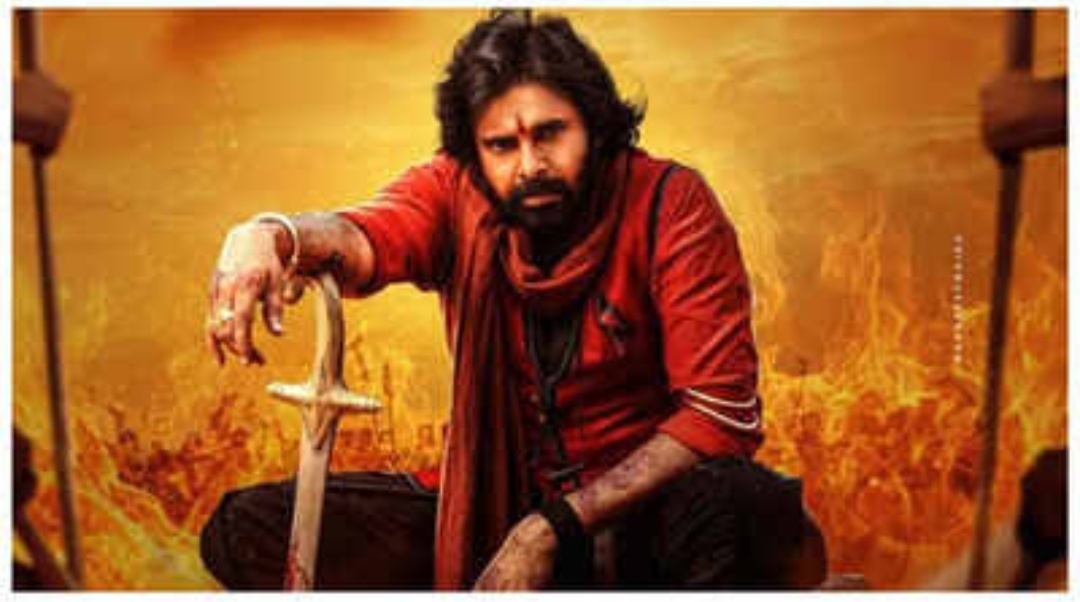
Whether Pawan Kalyan’s movie Hari Hara Veera Mallu is a hit or a flop is not the issue. What truly matters is the message conveyed by a person holding a responsible position. In the Telugu film industry, long seen as a hub of meaningful, family oriented cinema, a dangerously provocative film like this, especially one featuring a sitting Deputy Chief Minister rings warning bells for the future. It raises unsettling questions as to why both the Andhra Pradesh government and the Congress ruled Telangana government permitted an increase in ticket prices for a film that fans the flames of communal hatred. A project that began five years ago, Hari Hara Veera Mallu, was finally released this Thursday after multiple delays. But it seems to have failed to energize even his fan base. Observers of Pawan Kalyan’s recent speeches and political trajectory had predicted that this film wouldn’t be a historical epic but rather a tool to spread religious discord. It even casts suspicion that the actor, more than appealing to Telugu audiences or his own fans, may have aimed to please the RSS, the organization he currently reveres. It’s disheartening and dangerous that a popular figure among the youth of the Telugu states has allowed himself, through his ties with BJP leaders, to descend into communal provocation. The fictionalized presentation of historical places and people through a religious lens serves a clear political agenda. Pawan Kalyan once claimed he entered politics not for power, but for change and that questioning the system was his principle. Ironically, he now finds himself being questioned, contradicting his own earlier statements. If his confusion were only personal, it might be dismissed. But he holds influential roles both as a major film star and as a Deputy Chief Minister which means his words, actions, and roles significantly influence society, especially the youth. He must act with greater responsibility, as his fans expect. In India, especially in the Telugu states, film stars are often idolized even more than parents or children and people invest their hard earned money to support them. Such loyal fans are the foundation of someone like Pawan Kalyan’s rise. Undermining that foundation just to gain favor from certain quarters is unwise.
● Plot of Veera Mallu.
The film tells the story of a boy rescued from a river and raised by a family in present-day Palnadu district (formerly part of Guntur). Growing up in Bellamkonda’s Kolleru area, he becomes a skilled thief. A local chieftain rules the area, which is rumored to have diamonds. British East India Company officials conduct explorations there. The boy steals a diamond from them and gives it to his king. This diamond eventually reaches the court of the Nizam of Golconda. The Nizam assigns the thief the task of stealing the Koh-i-Noor diamond from Aurangzeb. As he heads toward the Red Fort with his team, he witnesses Aurangzeb imposing various taxes on Hindus, subjecting them to torture and forced conversions, which the hero resists. This forms the core of the movie.
● What Does History Say?
Historical records suggest that a large diamond was indeed found in the mines near Kolleru during British explorations. Though there are differing accounts of its weight, historians generally agree it weighed around 186 old carats or 38.2 grams. This diamond was first seized by Delhi Sultan Alauddin Khilji, then passed into Babur’s hands in 1626, gaining the name “Babur Diamond” in the Mughal court. Later, Nadir Shah of Persia acquired it from Muhammad Shah through manipulation and named it Koh-i-Noor (Mountain of Light), a name that stuck. The diamond passed through many hands before ending up in Queen Elizabeth’s crown in Britain. Despite ruling India for over a decade, the BJP has never spoken about reclaiming the Koh-i-Noor. Nor has their ally, Pawan Kalyan. The film glosses over British imperialism (possibly saving it for a sequel). In North India, the RSS and BJP have already been using cinema to promote religious hatred films like Kashmir Files, Kerala Story, Sambhaji, Jhansi and Chhava serve this agenda. Similarly, Razakar was released in Telangana and now Hari Hara Veera Mallu has entered Andhra Pradesh. The movie Chhava, released in March this year, sparked communal riots in Khuldabad, Maharashtra. BJP MP Udayanraje Bhosale soon demanded the demolition of Aurangzeb’s tomb. There can be no clearer evidence that these films are political tools. Can we believe Pawan Kalyan is unaware of this?
● The Progressive Legacy of Telugu Cinema.
Telugu cinema has played a profound role in the lives of Telugu people. Early films were mythological beginning with Bhakta Prahlada. But by 1938-39, Gudavalli Ramabrahmam initiated socially conscious filmmaking with Mala Pilla. Films like Vande Mataram, Raitu Bidda and Varavikrayam carried strong social messages and were embraced by the public. Between 1940-50, films like Bhakta Potana, Yogi Vemana, Tyagayya, Palnati Yuddham, Balanagamma Katha and Kanyasulkam connected with people from all walks of life. Later, Rajarao of the Prajanatya Mandali inspired change with Puttillu, followed by films like Rojulu Marayi, Pedda Manushulu, and Jayabheri, which amplified progressive thinking. Subsequently, cinema became dominated by titles like Dongaa, Khaidi, Rakshasudu, Pokiri, Poramboku, Gudumba Shankar and Idiot. In this stream, Hari Hara Veera Mallu appears to lay a foundation for a religiously divisive ideology. Over the past year and a half, Pawan Kalyan has fully embraced the RSS agenda. He has declared himself a protector of Sanatana Dharma. From commenting on Tirupati laddus to discussing the Pahalgam terrorist attack, his speeches have become increasingly religious in tone. This mirrors the trajectory of others who were once independent voices like former Vice President Jagdeep Dhankhar, former Kashmir Governor Satyapal Malik and ex-MP Subramanian Swamy, who eventually became mouthpieces for Nagpur’s ideologues. Writers, artists and progressives of Andhra Pradesh symbols of enlightenment must resist this growing religious hatred entering the cultural space. They must respond with their dreams, voices and art.