

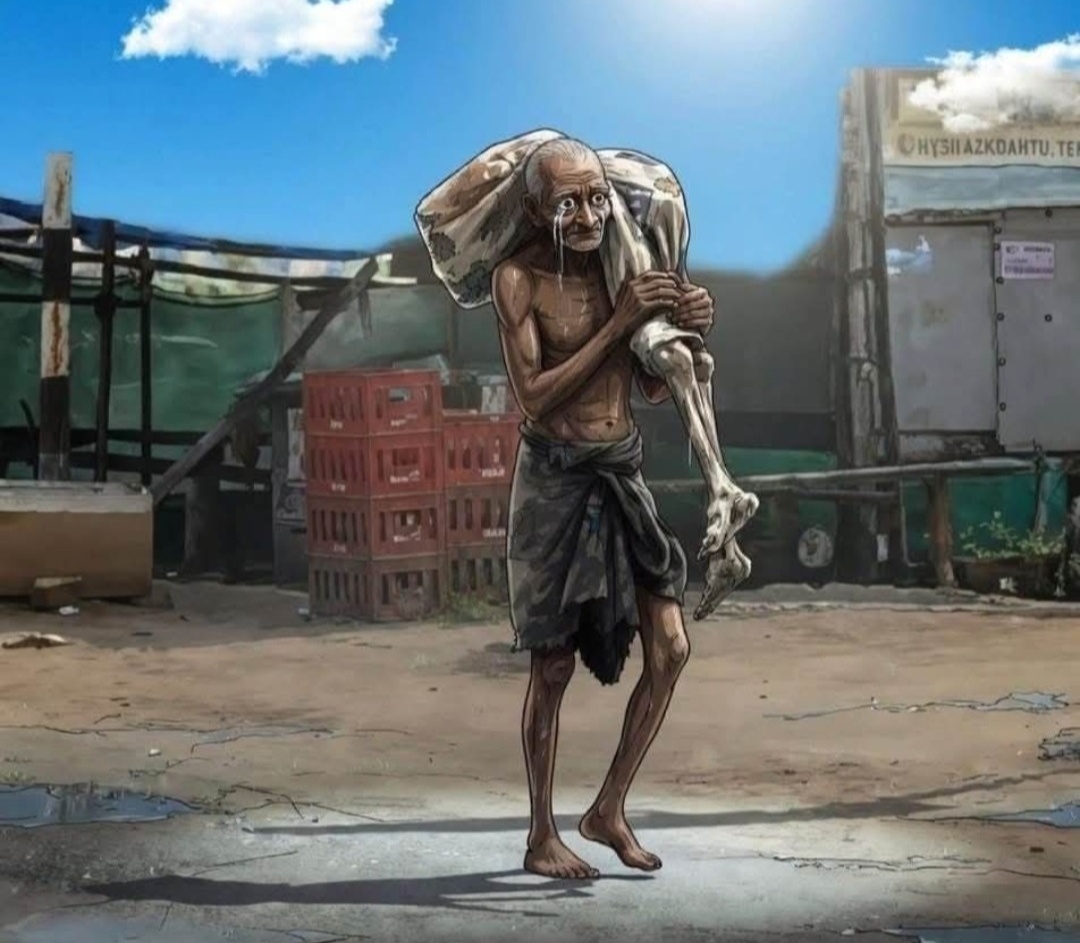
Four days ago, people across the country were deeply shocked by media reports of a skeleton protest march that took place in Odisha. This incident shook the hearts of anyone with humanity. It publicly exposed the poor performance and negligence of certain officials within the system. The protest by a younger brother carrying his sister’s skeleton in front of a bank has become one of the most horrifying examples of the negligence of various institutions in the country.
● A Symbol of Systemic Failure.
Yes, what exactly is a government? What is the role of officials within it? A system that should provide answers to such questions is, at times, becoming the cause of heartbreaking scenes. The Jitu Munda incident is one such example. This is not merely the suffering of one individual, it is a symbol of the failure of several systems in the country. The sight of Jitu Munda holding the skeleton of his sister, Kalra Munda, and protesting in front of the bank deeply moved everyone who saw it. This was not just a protest it was his final attempt to seek justice. This incident forces society to reflect on how much pain a poor man must endure before reaching such a tragic state.
● Inhumanity in the Name of Rules.
The pain in Jitu Munda’s story is not just about money, it is about a struggle for his rightful claim. Our institutions must understand that. Even though the family’s money was in the bank, officials reportedly refused to release it, citing lack of proper documents, and demanded that he bring his deceased sister in person. Such behavior is inhumane. The arrogance of authority that treats an innocent, illiterate tribal man so harshly has exposed the flaws in our system. More than people, it is our institutions that need to change first. For victims like Jitu, illiteracy and lack of awareness have become their greatest enemies. The real question now is: whom do government officials serve? Only the educated people living in cities? Or not the innocent villagers like Jitu Munda?
● Humanity Must Not Become Extinct.
If a system forgets its responsibility to provide public services and pushes humanity aside in the name of regulations, such incidents are inevitable. When a poor man is forced to bring the skeleton of his dead sister to claim his rights, it is not merely a personal tragedy, it is a shame on society itself. There are countless Jitu Mundas across the country. Their money remains trapped in banks and offices. But they do not know the path forward. Because of the absence of a signature or a document, their rights are denied. The arrogant conduct of some officials has brought disgrace upon the system itself. So, who is truly at fault here the system, or the people who run it? Governments from the Centre to the States must take this incident as a warning.
● If the System Does Not Change.
Governments should introduce special facilities and simplified procedures for suffering families like Jitu Munda’s. Dedicated support centers are needed to provide banking services to illiterate citizens. Most importantly, bank employees and officials must see their role not merely as a duty, but as a responsibility. Rules are necessary, but humanity is even more necessary. The skeleton in Jitu Munda’s hands that day was not just mortal remains, it was a symbol of systemic negligence. His helpless protest march with his sister’s skeleton showed how exhausted he had become fighting against the system. It serves as a reminder that institutions must change their ways immediately.
Otherwise, in the future, many more skeletons may wait for justice. That warning should awaken a stronger sense of responsibility in our systems.