

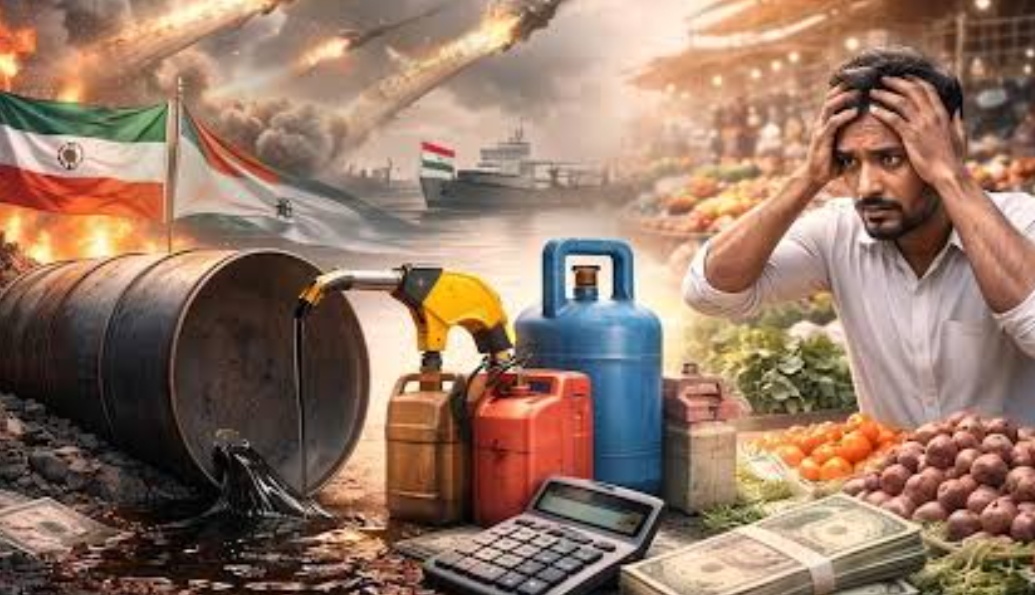
Due to the assembly elections in four states, the Modi government had exercised restraint in increasing petrol and diesel prices. However, as soon as the final phase of polling concluded in those states, the price of commercial LPG cylinders was sharply increased, putting a heavy burden on the common man. The election results for those four states are being announced on Monday. Immediately afterward, the government appears to be preparing for a hike in petrol and diesel prices. If that happens, it will further strain the finances of ordinary people.
An increase in fuel prices directly impacts the transport sector, which in turn drives up the cost of essential commodities such as vegetables, salt, and pulses. This will disrupt the monthly budgets of common households, creating a significant gap between income and expenditure.
● Government should not be in business.
On February 24, 2021, during a webinar organized by the Department of Investment and Public Asset Management (DIPAM), Prime Minister Narendra Modi stated that ‘it is not the government’s job to do business’. He reiterated this in a 2022 interview, saying that the government’s role is to frame policies, not engage in business activities. He has repeated similar statements on multiple platforms. Critics argue that these policies reflect a ‘Modi-mark trade approach’, allegedly favoring large corporate groups like Adani and Ambani and even aligning with American interests under the banner of free trade, potentially at the cost of national wealth.
● Gas price burden.
Recently, the government increased the price of commercial LPG cylinders by as much as ₹997 in a single month. As a result, the cost of a 19 kg commercial cylinder has crossed ₹3000 nationwide. This has led to a surge in prices at hotels, hostels, and food outlets. Small vendors, such as roadside tiffin stall owners, are struggling to cope. Eating at a hotel is increasingly becoming a ‘luxury’. Supporters of the government claim that domestic LPG prices have not been increased, but critics argue this highlights the issue: the price gap between domestic and commercial cylinders is over ₹2000, leading to black market diversion of domestic cylinders.
Authorities have been conducting raids on small businesses using domestic cylinders and filing cases against them, which also generates revenue for the government through penalties. Ultimately, the burden falls on the common man.
● Preparing the public mentally.
The central government is citing rising crude oil prices in the international market, especially due to tensions like the US–Iran conflict, as a reason for potential fuel price hikes. However, critics point out that when global crude oil prices dropped significantly earlier, there was no corresponding reduction in petrol and diesel prices.
There is growing speculation that the government has already signaled an inevitable fuel price increase through internal channels.
● Diesel diversion issue.
Government policies have created a significant gap between bulk and retail diesel prices. In some places, this difference exceeds ₹50 per liter.
● In Delhi, bulk diesel costs about ₹134.50 per liter, while retail price is ₹87.60.
● In Visakhapatnam, bulk price is ₹148.50, while retail is ₹96.22.
● In Hyderabad, bulk diesel costs ₹149.50, compared to ₹95.70 at retail pumps.
Because of this gap, bulk consumers are increasingly purchasing diesel from retail outlets, leading to a decline in bulk sales by 30–50%. At the same time, many retail fuel stations are displaying ‘No Stock’ boards.
This situation is cited as another example of policy decisions indirectly placing financial burdens on the public through pricing mechanisms.
● Impact on RTC.
The Telangana State Road Transport Corporation (TGSRTC), already facing severe financial difficulties, is further strained by the increase in bulk diesel prices. The corporation consumes around 600,000 liters of diesel daily. With an increase of approximately ₹50 per liter, the additional burden is estimated to exceed ₹3 crore per day. The RTC management has written to the central government requesting an exemption from the price hike, but no response has been received so far.