

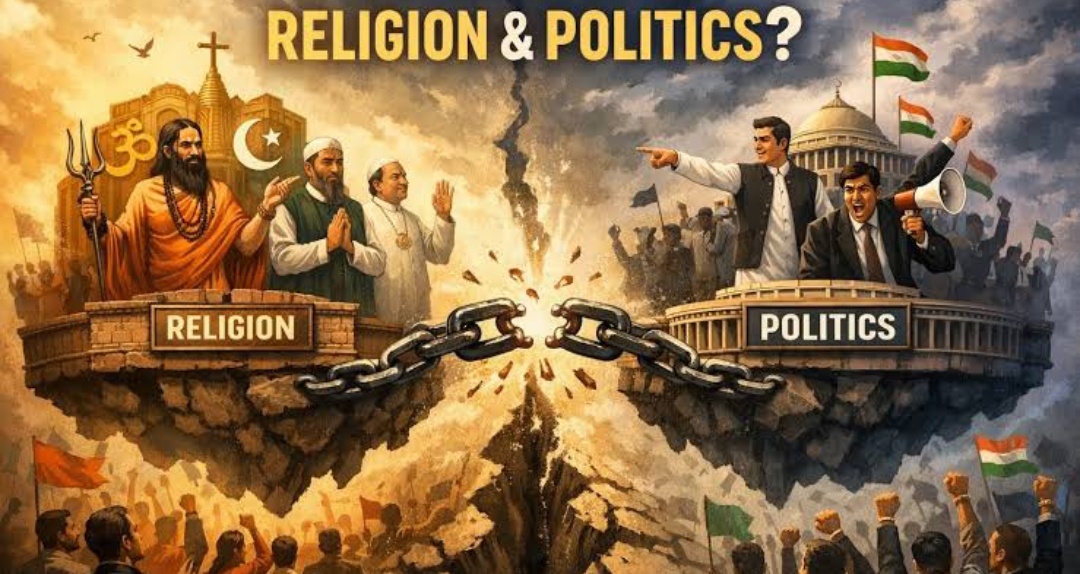
For some time now, certain religious extremist forces have been committing excesses under the mask of media, disturbing the peace of the state’s people. Religious fanaticism has begun to create severe fear and anxiety among the public. In a society that fails to see a human being simply as a human being, the rampage of these extremist forces has reached a point where some YouTube channels have taken it upon themselves to incite religious hatred wherever they find an opportunity. The individuals running such channels seem to have no regard for journalistic values, social responsibility, or the dignity that a journalist is expected to uphold.
The misconduct of representatives from a YouTube channel named Tejaswini, who targeted and harassed a Muslim brother named Sheik Shavali when he went to Medaram Jatara to sell khova buns, is absolutely inexcusable. Did they act with such audacity because they believe no one will question them? It is utterly wrong. What need did that YouTube channel have to create a controversy based on the name of a person who had come there to earn his livelihood? If there were concerns about the quality of the buns, they could have complained to the local food inspector. How can individuals lacking even such basic sense call themselves journalists? If such forces behave in this manner, why should the media remain silent spectators? They must be regarded as extremist forces. The police must take strict action against the media channel that sent them there to target a small vendor like Sheik Shavali and deliberately incite religious hatred.
Attempting to exploit a small vendor by publishing stories about the way he earns his livelihood or about the quality of the khova buns he sells is a disgrace to journalism. Some loafers and irresponsible individuals are misusing journalism as a cover to insult other religions and instigate attacks. Such actions not only damage the unity of the state’s people but also strike at the very foundations of India’s secularism. The behavior of certain YouTube channels has become bizarre. Their anchors and interviewers do not adhere to journalistic values in any way. Discussions on issues related to different religions are escalating to extreme levels, crossing all limits and turning into uncontrolled arguments.
The real issue is that YouTube channel administrators must be especially cautious. Under the pretext of conducting interviews, some individuals exceed the limits of appropriate questioning, themselves turning into religious extremists. They insult interviewees, address them disrespectfully in the singular form, speak sarcastically and throw challenges at one another yet claim this is journalism. Treating the public as fools has become a specialty of some YouTube channels.
Furthermore, some people travel even to distant places to appear in YouTube channel interviews, happily accepting hospitality and praise, yet failing to realize that what they are doing is wrong. Certain YouTube channels, merely for views, act as though they are prominent journalists, but in reality they are driven by religious fanaticism and the agenda of provoking hatred. This approach is not something that will quietly dissipate; it is like a fire smoldering beneath the surface that can erupt at any moment. Rather than eagerly watching the broadcasts of such YouTube channels, it is better for the public to refrain from viewing them.
Those who infiltrate sacred journalism with religious extremism and use YouTube platforms to incite hatred, behaving as if they alone have the right to do so, are not journalists at all they are unquestionably extremist and lawless forces. It is the responsibility of the government to curb these forces. Otherwise, there is a danger that even chants in the name of gods could escalate tensions to the point of a third world war.