
Artificial Intelligence Is Consuming Young People’s Time, Electricity and Water.

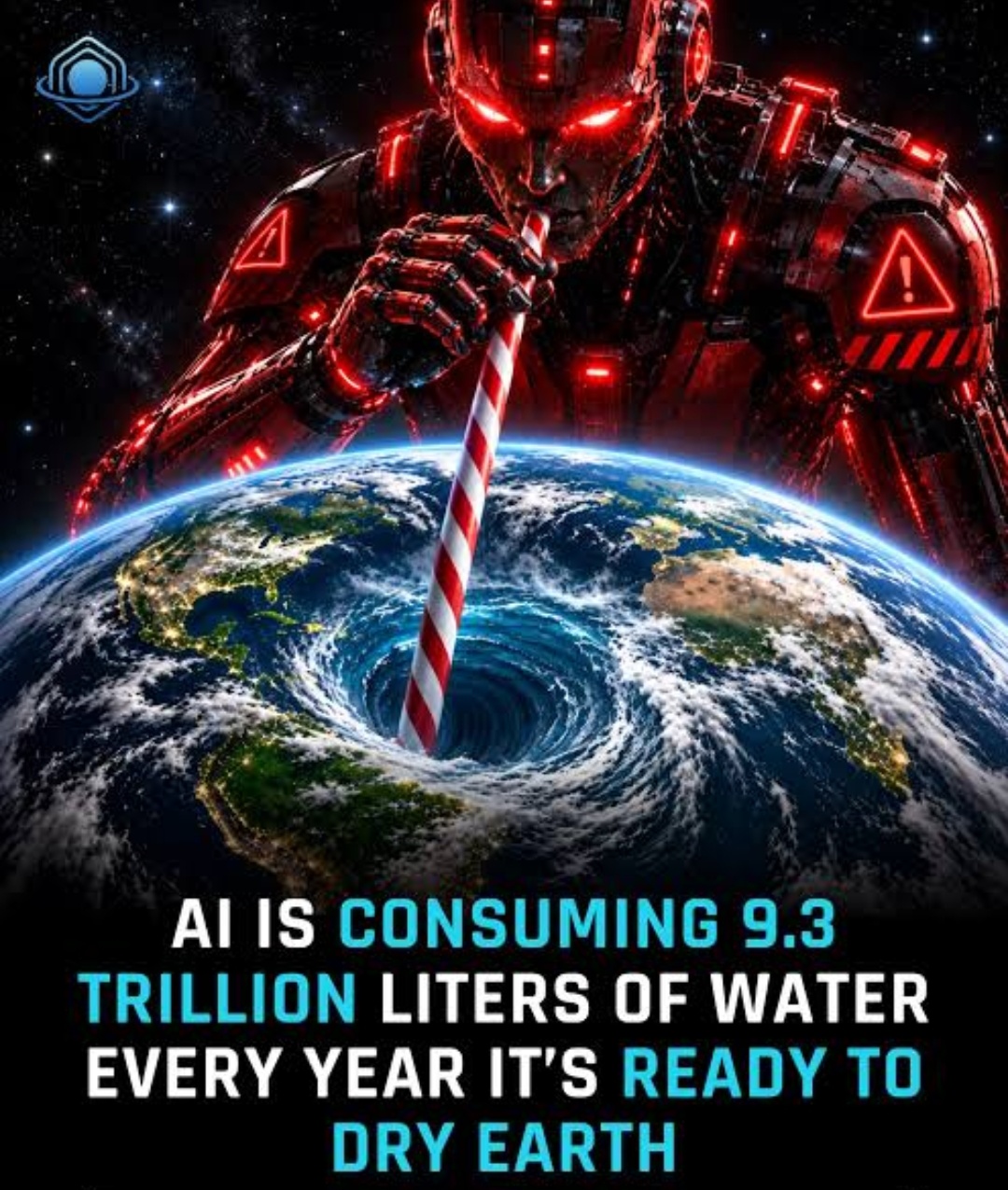
At a time when millions of young people are already struggling due to a lack of jobs and employment opportunities, another challenge has emerged in the form of Artificial Intelligence (AI). AI is not only replacing jobs but also consuming the valuable time of unemployed youth and the country’s resources. Behind the AI services offered free of cost lie enormous electricity and water consumption, along with profits for foreign companies. Concerns are growing that technology, which should create employment opportunities, is instead becoming the cause of another crisis. Fear of job losses due to AI is spreading across the world. However, the situation in India is even more complicated. The country is already facing severe unemployment due to an inadequate number of job opportunities. In this context, the arrival of AI is not only threatening existing jobs but also turning the time spent idle by unemployed youth into an additional burden. As AI usage increases, pressure on electricity and water resources is mounting, while the major profits generated by this technology are flowing to foreign companies.
● Increasing Exploitation of Resources.
India has already failed to generate sufficient industry-based employment opportunities. The services sector, particularly the IT industry, has provided jobs to millions of middle-class youngsters. Now, with the entry of AI into this sector, the very foundation of employment is becoming weaker. Every year, the government highlights India’s demographic dividend, but it has failed to provide adequate employment opportunities to its youth. Meanwhile, the chips, models and enormous profits associated with AI technology remain largely under the control of American companies. India, on the other hand, is contributing consumers, data and electricity. This situation is similar to the colonial era, when the British took cotton from India, manufactured textiles in their own country and sold the finished products back to Indians. Today, we are sending questions to foreign companies and purchasing answers from them.
● Unemployment: A Matter of Serious Concern.
The fear of AI replacing jobs is becoming increasingly evident in the United States and European countries. However, India’s situation is different. Here, government employment remains the primary aspiration for a large section of the youth. Even in the private sector, inadequate opportunities continue to fuel unemployment. In addition to the existing unemployment crisis, AI usage is now creating another burden. According to government statistics, the unemployment rate appears to be around five per cent. However, the actual situation is far from encouraging. Experts point out that the severity of unemployment is not fully reflected in official figures because a person who works for at least one hour on just one day of the week is counted as employed. In reality, such work cannot be considered full-time employment; it is merely inadequate and irregular work. Experts say that the youth unemployment rate reaching 16.2 per cent in June highlights the seriousness of the situation.
● A Shock to the IT Sector.
Another significant development is visible in the IT sector. For the first time in two decades, the combined workforce of five major IT companies in the country has recorded a net decline. TCS alone has witnessed a reduction of more than 23,000 employees. The company’s chairman has announced that AI agents could be deployed on a scale comparable to human employees over the next three years, raising serious concerns. In particular, AI could replace entry-level tasks such as testing, technical assistance and documentation, which traditionally provide opportunities for fresh graduates entering the workforce. As a result, young people who need these initial opportunities to gain experience and progress to higher positions may find fewer avenues for career development.
● Rising AI Usage: Increasing Pressure on Electricity and Water Resources.
Meanwhile, internet usage and AI adoption are growing rapidly across the country. Millions of people in India are using ChatGPT, and a large number of students are also becoming increasingly dependent on AI services. Companies are attracting users by offering free services. However, behind these supposedly free services, users’ information and usage patterns are becoming valuable resources for the companies. At the same time, AI usage is significantly increasing electricity consumption. Although the electricity required to process an individual query may appear relatively small, the impact becomes substantial when millions of people use these services simultaneously The International Energy Agency estimates that global data centre electricity consumption could reach 945 terawatt-hours annually by 2030. Notably, this would be higher than Japan’s current annual electricity consumption. Data centres require enormous quantities of water in addition to electricity. This could create further difficulties for regions that are already experiencing water shortages. While AI is expected to increase productivity and reduce human labour, it is becoming another challenge in a country where adequate employment opportunities are already lacking. If the benefits of technological advancement remain restricted to a handful of companies, ordinary young people may be left with nothing but unemployment. Intellectuals are warning that the consequences could include wasted time and increased consumption of valuable natural resources. Therefore, the real concern today is not merely how many jobs AI will replace, but how far it will aggravate unemployment, economic inequality and the exploitation of natural resources in the country.