

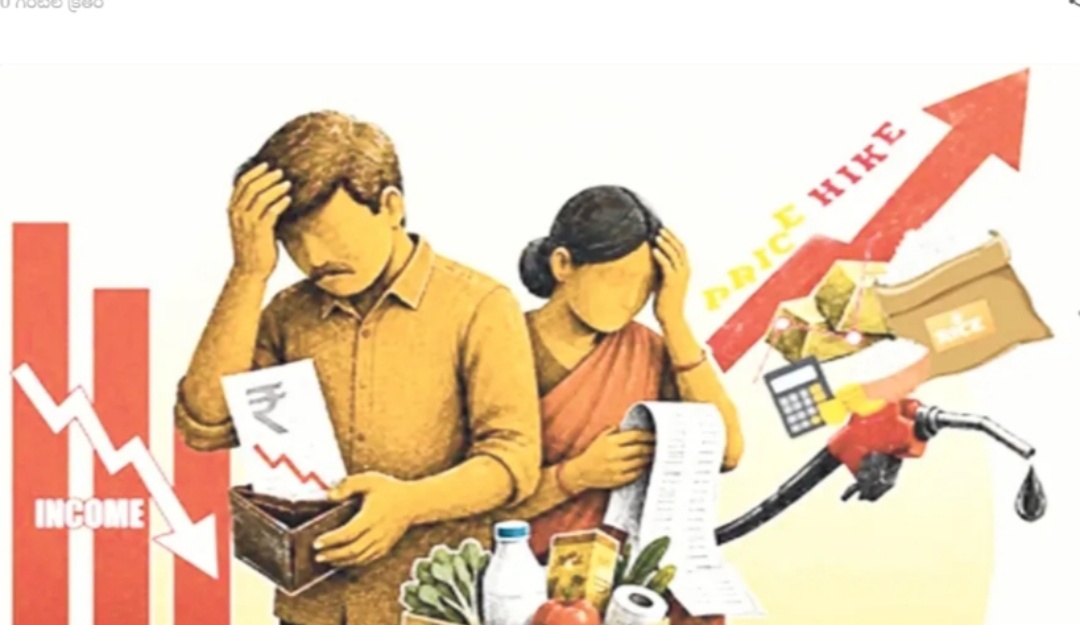
The ruling establishment’s claims about India’s economic growth are reaching extraordinary heights. The government boasts of making India the world’s third-largest economy and highlights rising GDP growth rates through statistics. However, it is ignoring the harsh reality that millions of people are struggling to afford even essential commodities. The slogan of Achhe Din (good days) is repeatedly invoked, but instead of good days, people are experiencing what can only be described as days of hardship and distress. The hard-earned income of ordinary families is no longer sufficient to meet even their basic household needs. For the past four months, onions have been selling at Rs. 60 to Rs. 70 per kilogram in Hyderabad markets. Prices of essential commodities such as vegetables, pulses, cooking oils and milk have also remained high. Adding to these concerns, rumours are spreading that the impact of El Niño could lead to a shortage of rice. Under such circumstances, how are ordinary people expected to survive? What purpose does a government serve if it cannot meet the basic needs of its people?
Government statistics themselves reveal the severity of rising prices. Wholesale inflation reached 12.29 per cent in October, compared to 11.39 per cent in September. This indicates that commodity prices are rising at the level of traders and producers. The increase in prices of goods purchased by ordinary consumers in retail markets is measured by retail inflation. This rose from 5.54 per cent to 6.09 per cent. Food inflation increased from 7.74 per cent to 8.94 per cent. For example, goods that cost Rs. 100 last year now require an average expenditure of Rs. 110. Other economic indicators also point to the growing burden of inflation. The price increases in individual commodities are even more alarming. Compared to October last year, the price index for onions increased by 116.22 per cent, garlic by 60.74 per cent, ginger by 48.32 per cent and lemons by 47.30 per cent. Rice prices have also registered a significant increase, while the rise in the prices of millets has been even higher. According to a CRISIL report, the cost of preparing a vegetarian meal at home has increased by 12 per cent compared to last year, while the cost of a non-vegetarian meal has risen by 9 per cent. This means that people now have to spend more even to cook and eat at home. Rising cooking gas prices are also pushing up the cost of meals and tiffins at hotels and restaurants. The cost of living is increasing for students, low-paid employees, migrant workers and small business owners. The real problem is the widening gap between people’s incomes and their expenses. Salaries, daily wages and employment opportunities are not increasing, while prices continue to soar.
As soon as monthly salaries are received, most of the money is spent on house rent, electricity bills, children’s education, healthcare, transportation and food expenses. Forget saving money; people are increasingly being forced to borrow just to manage their daily lives. Poor families are cutting down on nutritious foods such as pulses, milk and fruits, while middle-class households are also reducing their essential expenses. When people’s purchasing power is declining, how can market demand increase? How can we claim that the economy is becoming stronger? Merely measuring rising prices through inflation statistics will not reduce people’s hardships. Even when inflation declines, prices do not return to their previous levels. Improving people’s living standards requires an increase in their purchasing power. For this, unemployment must be reduced and permanent employment opportunities must be created. The incomes of workers, employees, farmers and agricultural labourers must be increased. Minimum wages should be revised in accordance with the rising cost of living. Meanwhile, the depreciation of the rupee is increasing import costs and placing an additional burden on the prices of essential commodities. Production and distribution systems must be strengthened, illegal hoarding and monopolistic practices must be curbed, and effective regulation of the market must be ensured.
Increasing interest rates and adding to the burden of loans will not solve the problem when people’s incomes are not rising. The policies of those in power, who have failed to increase people’s incomes, protect the value of the rupee and instead shift the economic burden onto ordinary citizens, are among the root causes of rising prices. When the government speaks about economic growth, it must also explain who is actually benefiting from that growth. If wealth continues to be concentrated in the hands of a few while the incomes of the majority remain stagnant, GDP growth will not transform the lives of ordinary people. Before aspiring to become the world’s third-largest economy, the government must ensure that every citizen has enough food to eat. Increasing people’s purchasing power, creating employment opportunities, strengthening the public distribution system, supporting small-scale industries and ensuring better wages for workers are immediate priorities.
Development does not simply mean an increase in GDP figures; it means ensuring that the lives of ordinary people do not become increasingly burdensome. When people are struggling just to make ends meet, what is the significance of boasting that India is emerging as the world’s third-largest economic power?