

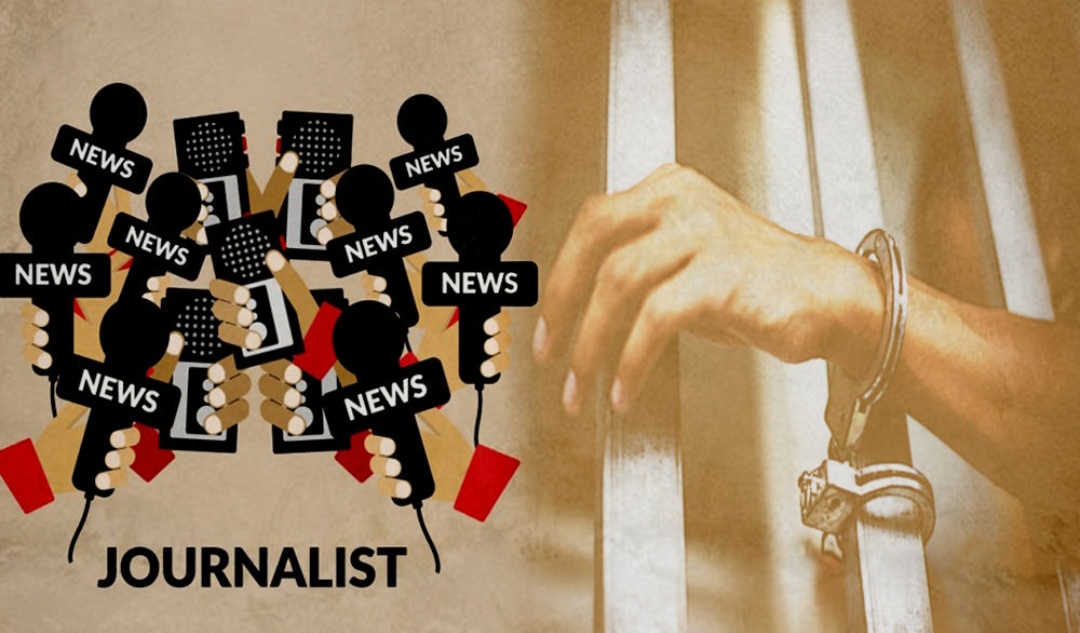
The right to speak the truth is the lifeblood of democracy. Is speaking the truth a crime in a democracy? Is questioning authority an act of sedition? Is it just to file cases against a journalist who stands with the people and exposes flaws in the system? The Supreme Court of India has not only answered these questions but has also given a clear direction to the nation. In a recent landmark case (Writ Petition (Cr.) No. 402/2024, dated 04.10.2024), the Supreme Court once again reaffirmed a great principle:
‘Registering an FIR against a journalist merely for reporting the truth is an abuse of the judicial process. An FIR must not become a weapon of intimidation’.
This is not just the victory of one journalist. This is the day Indian democracy won.
● Who is a journalist?
A journalist is not merely someone who reads the news. A journalist is not just a person holding a camera. A journalist is a warrior of public accountability. A journalist is someone who questions authority on behalf of the people, holds power up to a mirror, brings hidden truths out of darkness and becomes the voice of the poor. Simply put, a journalist is the inner voice of the people.
● What are the responsibilities of journalists?
A true journalist carries sacred responsibilities
* To report the truth without fear or distortion.
* To question authority to inform and empower the public.
* To expose injustice not out of devotion, but out of duty.
* To stand with the people, no matter who commits the wrongdoing.
A journalist’s job is not to promote the government.
A journalist’s real duty is to question the government for the people.
● The danger of silence.
Journalistic silence is a danger to society. If journalists fall silent
* Corruption grows.
* Abuse of power increases.
* The public remains unaware of the truth.
* Democracy dies from within.
That is why the saying is true ‘In a country where journalists are afraid, the people become slaves’.
● Journalists and lawyers are protectors of public rights.
If a journalist exposes the truth, a lawyer gives that truth justice. A lawyer is a person who uses the Constitution as a weapon, stands with the victim, challenges abuse of power in court and legally protects people’s rights. In reality, a public-interest lawyer is a journalist within the justice system. Journalists and lawyers together form society’s shield
* The journalist questions on the street.
* The lawyer fights in the courtroom.
* The journalist is the people’s voice.
* The lawyer is the people’s weapon.
Together, they bring out the truth and ensure justice stands firm.
● Who is the real opposition?
Is it only political parties? They seek power. But who truly stands with the people? The real public opposition is the journalist and the public-interest lawyer. They do not seek positions or authority. Their sole objective is to protect people’s rights. That is why it must be stated clearly ‘The true opposition in this country is journalists and public lawyers’.
● Supreme Court’s warning to the nation.
The Supreme Court’s message in this case is a warning
* An FIR is not a weapon of fear.
* Freedom of expression is not a crime.
* Suppressing journalists is unconstitutional.
Writing the truth is a service to the nation. This judgment is not for one journalist alone. It is for the freedom of every citizen.
● An appeal to the people.
If a journalist is targeted today, do not remain silent.
If injustice happens to you tomorrow, who will write about it? Support genuine journalists. Stand with public interest lawyers. Oppose false cases, Protect those who speak the truth. Because
* Without journalists, truth dies.
* Without lawyers, justice dies.
* Without both, democracy dies.
Once again, the Supreme Court has proved ‘Truth is still alive. Justice is still vigilant. Democracy has not yet lost hope’. This is not merely a judgment. This is a national warning. This is a democratic call. Stand with truth. Walk with justice. ‘Stand with journalists, Stand with lawyers and Protect democracy’.