

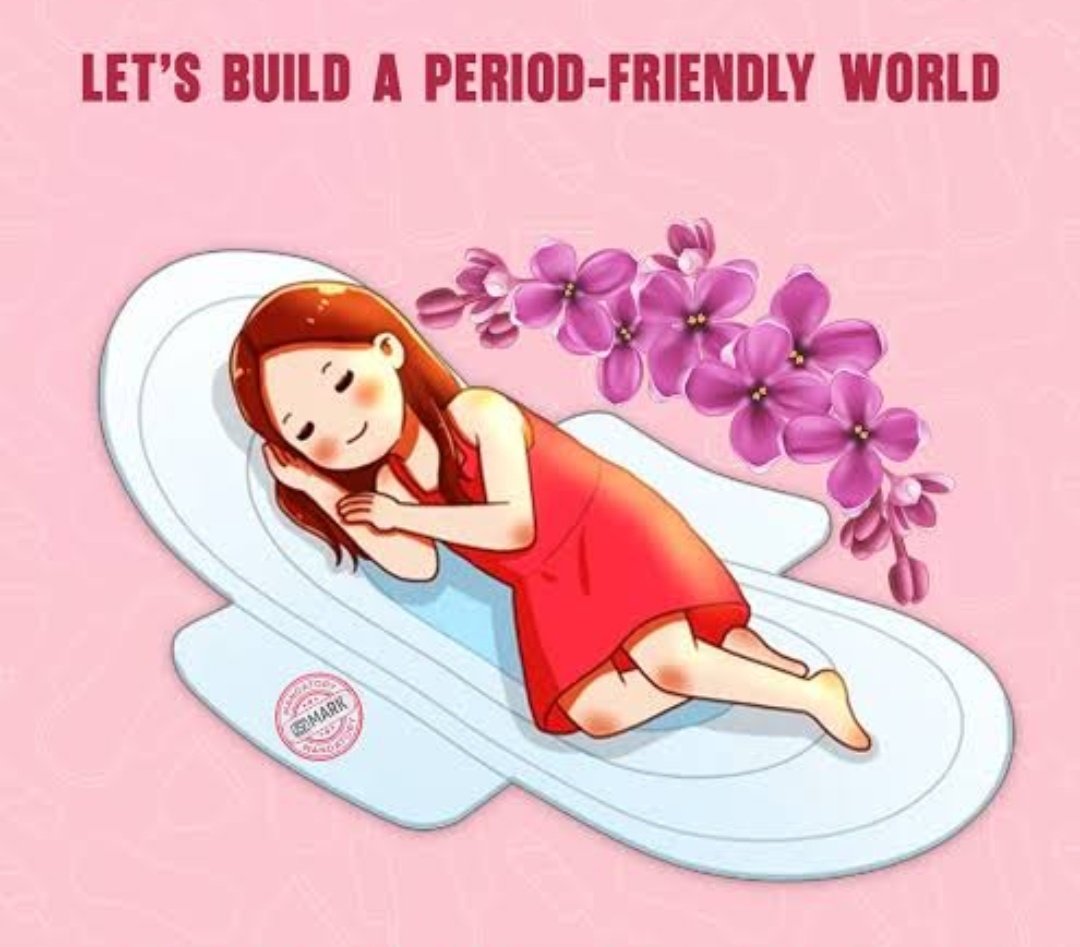
We have moved from reacting to menstruation with discomfort and embarrassment to a stage where even mentioning it is often met with silence. Menstruation usually lasts for five days and occurs once every twenty-eight days. That is why May 28, the fifth month and the twenty-eighth day, is observed as ‘Menstrual Hygiene Day’. The theme being promoted on this occasion is ‘Let’s Build a Menstruation-Friendly World’. However, transforming a world that is often not friendly to women into one that is supportive of menstruation is not easy. Yet, it is certainly not impossible. The solution lies in steadily moving toward that goal. To build a menstruation-friendly world, the first step is to talk openly about menstruation. Everyone – from children to the elderly – should be able to discuss it comfortably and respectfully. Conversations about menstrual discomforts, irritations and signs of healthy menstruation should become part of everyday discussions. Clean and high-quality sanitary products should be available to everyone at affordable prices. Governments should distribute free sanitary napkins to schoolgirls, wage laborers and women and girls who cannot attend school or work.
● Access to clean water is essential.
Not only during menstruation, but even for daily hygiene after urination and defecation, many underdeveloped countries, including ours, still lack proper water facilities. Clean toilets equipped with water, soap and dustbins for disposing of sanitary napkins are extremely beneficial for women’s health. Girls who miss school or college because of menstrual difficulties should still be allowed to appear for exams even if their attendance falls short by thirty to forty days a year. Working women and female laborers should be granted two or three days of leave every month without needing to provide explanations. Nearly half of the world’s population menstruates for at least 30-35 years of their lives. Although many women gradually become accustomed to menstruation, girls who have just entered puberty often struggle during the first four or five years. Around 300 million women worldwide menstruate every day.
● Toilets and Facilities.
Out of the four billion women in the world, around two billion menstruate every month. The remaining are children or elderly women. Among these two billion women, one-fourth – around 500 million – do not have access to adequate menstrual hygiene facilities. In poorer countries, nearly half the women lack proper facilities.
In India, at least 25% of girls avoid going to school, college or work during their periods. The main reason they cite is the lack of proper toilets in educational institutions and workplaces.
● For menstrual hygiene, toilets should have.
Clean water, Soap for washing hands and body parts, Laundry soap and washing space for reusable cloth users, Dustbins and newspapers for wrapping used sanitary pads, Storage spaces such as cupboards or bags for menstrual products and undergarments, Proper doors with functioning locks, Windows positioned high enough to ensure privacy. Educational institutions and workplaces must strictly implement these facilities. Otherwise, many girls fall behind in education simply because of menstrual difficulties. After urination or defecation, the genital area should be cleaned with water. Since the vagina naturally cleans itself through secretions, soap water should never be inserted inside the vagina.
● Menstrual Products Available Today.
Sanitary pads are the most widely known menstrual product. After World War I ended in 1920, nurses noticed that cotton bandages used for wounded soldiers absorbed blood effectively and began using them as pads. Since then, companies have manufactured menstrual pads using cotton and cellulose-based materials. Today, sanitary pads are available even in remote villages in India. However, because they are expensive, many women still use pieces of old sarees or cloth as pads. In India, girls generally prefer sanitary napkins from menarche until marriage, often due to family customs or fear of trying other products. Many parents themselves lack proper awareness and unintentionally pass misinformation to their daughters.
With advances in science and technology, various menstrual products are now available, including Tampons, Menstrual cups, Menstrual discs, Period panties, Diapers, Biodegradable pads, Reusable cloth pads. Among these, tampons, menstrual cups and discs are inserted inside the vagina. Tampons have ancient origins. Greeks once wrapped wool or soft cloth around small sticks and inserted them vaginally. After the Industrial Revolution, tampons began to be commercially produced using highly absorbent materials. In India, awareness about tampons is only now increasing. Until two or three decades ago, even sanitary napkins were not widely available. Earlier, almost everyone used soft old clothes.
● Cleanliness Is Essential.
Reusable cloths must be thoroughly washed and dried in sunlight and open air. Alternatively, they should be boiled in water for 10-15 minutes before drying. Loose and breathable undergarments should always be worn. However, due to stigma and shame surrounding menstruation, many women dry menstrual cloths secretly in dark, poorly ventilated places where sunlight and air do not reach. Some even wear undergarments before they are fully dry. Failing to keep the area dry can lead to various infections. Poor menstrual hygiene and improperly cleaned reusable cloths often cause infections.
● Infections Caused by Poor Hygiene.
Bacterial and fungal infections commonly affect the cervix, vagina and skin. One problem is the infection itself; another is the reluctance to discuss it, seek medical advice, or consult doctors due to shame and hesitation.
● Menstrual Cups.
Among all menstrual products currently available, menstrual cups and menstrual discs are considered the most environmentally friendly and comfortable. They are made of silicone, a soft plastic-like material. One cup or disc can be used for five to ten years. After washing hands thoroughly, they are folded into a ‘V’ or ‘C’ shape and inserted into the vagina. Depending on menstrual flow, they can remain in place for 8-12 hours. Menstrual blood collects inside the cup or disc, which can then be removed, washed with water and soap and reused.
They are available in different sizes suitable for women of all ages. Girls who have just started menstruating may initially find them difficult to use and should first become familiar with their bodies. For women accustomed to menstruation and for mothers, cups are usually easy to use. Compared to sanitary pads, they have a much lower risk of infections. Once accustomed to them, women can comfortably exercise, swim and do aerobics even during periods.
However, menstrual cups should be boiled in hot water for at least three minutes between cycles. Tampons, cups and discs must be cleaned every twelve hours to avoid the rare risk of Toxic Shock Syndrome.
● Discrimination and Misconceptions.
Society often indirectly discriminates against menstruating women. Last year in Uttar Pradesh, a 36-year-old woman named Soni died by suicide after becoming distressed because her period started on the day of a religious ritual. She had two children. In some religious traditions, menstruating women are prohibited from entering places of worship. Even where direct discrimination is absent, myths, prejudice, and patriarchal attitudes create restrictive practices. As a result, many women alter their menstrual cycles using hormonal medicines to attend pilgrimages, weddings, examinations or other events. Frequent use of such medications is harmful to women’s reproductive health.
● Everyone Must Talk About Menstruation.
Menstrual myths should be openly discussed. Men should also be educated about menstruation so they can support their partners and children. Otherwise, women may silently suffer emotional distress and isolation.
● Myths and Facts.
‘Touching pickles during periods spoils them’. This is only a myth. Pickles spoil because of moisture and fungal growth, not because menstruating women touch them. ‘Girls should not move around or exercise during periods’. Girls can do all activities freely during menstruation. Exercise is safe if the body feels comfortable. ‘Curd, meat, and fish should not be eaten’. These foods contain important proteins. Women can eat them. Leafy greens and colorful fruits help provide iron. ‘Women should not visit religious places during menstruation’. This is a religious custom, not a scientifically proven restriction. ‘Unmarried women should not use menstrual cups’. Menstrual cups are available in various sizes and can be used by anyone. ‘White discharge is unhealthy’. Mid-cycle white discharge is usually normal and indicates reproductive health unless accompanied by itching or foul smell. ‘Periods should last only three days’. Menstruation can normally last from three to seven days. ‘Menstrual pain must simply be endured’. Safe medications are available to reduce menstrual pain. Women should consult doctors and use appropriate treatment. ‘Painkillers for periods become addictive’. Medicines prescribed by doctors provide comfort and improve quality of life. We must remove such misconceptions and create a menstruation-friendly environment.
● Karnataka Government Initiative.
The Karnataka government announced twelve days of paid menstrual leave annually for women working in organized sectors such as factories, plantations, beedi work, and motor units for women aged 18-52 years. Bihar became the first state in 1992 to grant two days of menstrual leave per month to women government employees. Later, Kerala introduced menstrual leave for female university students in 2023. Odisha announced menstrual leave in 2024 for women working in both private and government sectors. However, the Supreme Court expressed concerns about making menstrual leave a nationwide law, arguing that mandatory menstrual leave might reduce employment opportunities for women because profit-oriented companies could prefer hiring men instead. Nevertheless, broad discussions on menstrual leave are necessary. Girls aged 13-18, who are newly entering puberty, often need four or five years to adjust physically and emotionally to menstruation.
Therefore, even if their attendance drops by 6-10% due to menstrual difficulties, they should still be allowed to appear for examinations. Such support would greatly benefit their physical health, mental well-being, and overall development.