

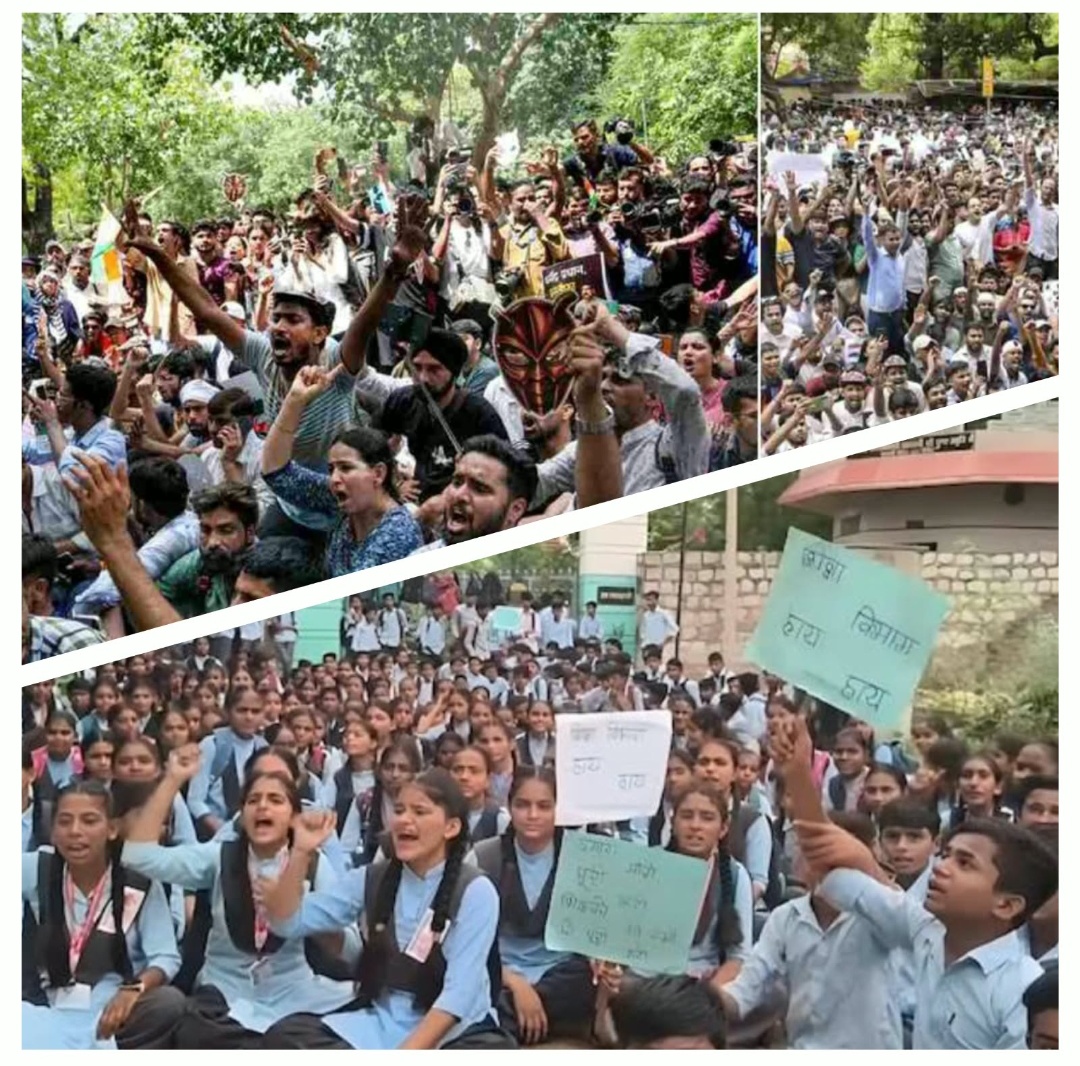
When systems and governments fail to meet people’s needs and aspirations, young men and women, along with students, take to the streets to question them. This has become a defining feature of the present times. From school blockades in France to massive demonstrations demanding the right to housing in Spain and youth and student movements in India, these protests reflect growing discontent and a strong desire for change. Although countries and languages differ, the younger generation faces almost identical problems across the world. Their dissatisfaction stems from pressing questions: Why are quality education, stable employment, affordable housing and a dignified life becoming increasingly inaccessible despite growing wealth? The capitalist economic system shows great commitment to concentrating wealth but fails to demonstrate the same concern for meeting people’s basic needs. As a result, young people are forced to wait for jobs even after completing their education. Even when they secure employment, their salaries are often insufficient to meet basic needs. While opportunities continue to expand for those with financial resources, competition becomes increasingly difficult for young people from ordinary families. These circumstances are among the primary reasons driving them onto the streets.
The student movement that began in France in mid-September expanded into nationwide protests in October. The agitation, which started at a school in Créteil near Paris, was driven by a shortage of teachers, overcrowded classrooms, dilapidated school buildings and a lack of educational resources. By October 1, more than 1,000 schools across the country had joined the protests. According to government estimates, 266,000 students participated in demonstrations held on October 6. In Paris alone, 56,000 people took to the streets. In addition to demanding improvements in educational facilities, protesters raised their voices against cuts in public expenditure, the deterioration of public services and the lack of job security. Eventually, the government yielded to pressure and announced that it would recruit 3,000 teachers for schools facing shortages. Student organisations declared that their struggle would continue until all their demands were addressed. The protests in France illustrate the consequences of weakening the public education system.
In Spain, the younger generation’s struggle has brought another fundamental issue to the forefront: the housing crisis. On October 3, thousands of people took to the streets in Madrid and approximately 50 other cities across the country to protest against the housing crisis. Rising rents, a shortage of homes and the growing control of residential properties by investment firms have intensified the situation. The eviction of 87-year-old Maricarmen Abascal from the home where she lived in Madrid on September 23 sparked public outrage. Protests intensified after Parliament rejected proposals intended to provide relief to tenants. According to a report released by a Spanish youth organisation in May 2026, the proportion of young people living independently fell to 14.5 per cent in 2025. The average monthly rent stood at €1,176, while the average monthly salary was only €1,191. This means that 98.7 per cent of an average monthly salary would have to be spent on rent. It is alarming that housing, instead of being recognised as a fundamental component of the right to live with dignity, has become a means of generating excessive profits from investment. The rental market is pushing young people into a crisis and influencing major life decisions, including marriage, starting a family, having children and living independently.
In India, dissatisfaction among students and young people is linked to a wide range of problems. Irregularities in the NEET examinations and government negligence have caused serious anxiety among students. The weakening of public education, the expansion of corporate education, the growing financial burden on families and the scarcity of opportunities are among the factors contributing to this crisis. Contractual employment, low wages and a lack of job security are further deepening frustration among the youth. Those in power, who should be addressing these problems, are instead resorting to communal and divisive politics to divert public attention. In their pursuit of power above all else, they are undermining institutions across the country. Under BJP rule, it has become a political pattern to respond to questions about unemployment with speeches on patriotism, portray their own failures as conspiracies by political opponents, and turn discussions about economic inequality into disputes fuelled by religious hatred.
Narrow-minded strategies that portray people from other countries and followers of other religions as the root causes of social problems have become a global trend. The governments of Narendra Modi and Amit Shah in India have taken this approach even further. Consequently, instead of addressing the protests at Jantar Mantar through dialogue and an atmosphere of mutual understanding, the authorities are attempting to suppress them through authoritarian and undemocratic measures. Suppressing movements does not make them disappear. The government is behaving as though it has forgotten the basic truth that protests subside only when meaningful solutions are offered.
The growing presence of young people on the streets across the world is a clear indication of the failures of contemporary capitalist and neoliberal policies. When the benefits of development are concentrated in the hands of a few, the majority are pushed into hardship and eventually take to the streets. Production may be increasing, but employment opportunities are not growing proportionately. Education may be expanding, but suitable jobs are not available to match people’s qualifications. Cities may be developing, but housing remains beyond the reach of ordinary people. These are some of the fundamental contradictions of the capitalist system. Addressing these contradictions requires reducing the concentration of wealth and increasing government expenditure on education, public healthcare and social security. Questioning a model of development that fails to meet people’s needs is not merely the responsibility of the younger generation; it is also essential for the survival and strengthening of democracy.