

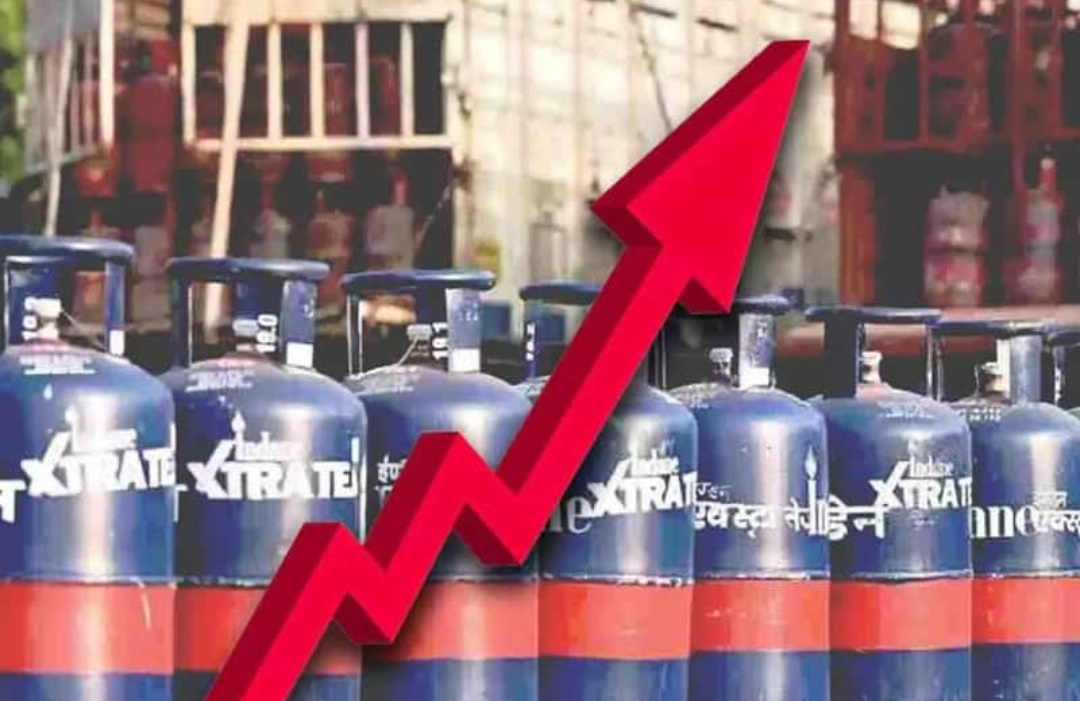
There are no elections at present; if there were, perhaps it would have stepped carefully, but it struck at the opportune moment. Not ten or twenty, but a whopping Rs.69 has been added to the price of a commercial cylinder, and the Modi government has dealt a heavy blow to small traders. This increase during the festive season will also put a hole in consumers pockets. Even cooking at home, the prices of pulses, oil, salt, sugar, vegetables, and cooking gas are turning the common man’s budget upside down. Petrol and diesel prices, meanwhile, show no sign of coming down. Even though incomes are not increasing, expenses are rising day by day. At such a time, it is unjust for the Centre, which should be taking measures to provide relief, to once again impose the burden of higher gas prices. The cylinder price, which was Rs. 2,996 until recently, has reached Rs. 3,065 from October 1. This increase is going to have a severe impact on the food on the common man’s plate. Tea at a tea stall costs Rs.15, while a tiffin costs at least Rs.40; if you step into a reasonably well-known hotel, these prices cross Rs. 25 to 80. There is no need to say what the prices are at star hotels. In the wake of the increase, these prices are going to become even more expensive. Commercial gas is used not only by large companies but also by tea shops, tiffin centres, small hotels, bakeries, canteens, and catering organisations. When the cylinder price rises, traders are not prepared to bear the entire burden. They pass it on to consumers by increasing the prices of tiffin, tea, and meals.
When Modi first came to power in 2014, the price of a nineteen-kilogram commercial cylinder was around Rs.1,541, whereas now it has nearly doubled. Although each increase may appear small, over time this burden has become enormous. This is increasing the operating costs of small businesses and, ultimately, the expenses of ordinary families. The Centre says that prices are rising because of international market prices, import costs, transportation costs, and supply problems. It is true that tensions in West Asia and the Strait of Hormuz crisis are affecting international LPG prices. But when prices rise, how reasonable is it to pass that burden on to the people? When prices fall, why do the benefits not reach the people at the same speed? No one knows how much of a cylinder’s price consists of import costs, taxes, transportation, and margins. Even if the government cannot control international prices, how much of that burden should be imposed on the people is a policy decision of the government. Is this burden not the result of ignoring that? International conditions alone are not responsible for rising prices. How fuel imports should be managed in the country, how much dependence should be placed on which countries, and how taxes and pricing policies should be implemented also depend on policy decisions taken by the Centre.
Even when cheaper resources are available, if there is a need to depend on expensive alternatives, that additional cost ultimately falls on the people. Therefore, it is not right to link every price increase to the international market and evade responsibility. Questions are also being raised about the path being followed by the Centre regarding fuel imports. Against the backdrop of the West Asia crisis, the US share of India’s LPG imports was 7.9 percent between September 2025 and February 2026, while it increased to 53 percent between March-August 2026. The increase in imports from the US is becoming an issue that will affect prices, supply, and future energy security. There is a need to diversify imports rather than depend excessively on a single country. In the past, India bought crude oil from Russia at discounted prices and saved significantly. If purchases from Russia decline and there is a need to depend on expensive alternatives, that additional cost too will ultimately fall on the people in the form of transportation, goods, and food prices. Diplomatic relations with the US are one issue, while the country’s energy security and people’s purchasing power are another. The benchmark for energy policy should not be to satisfy any superpower, but to ensure that India gets fuel cheaply, securely, and continuously. Therefore, an independent policy is needed to purchase fuel from wherever it is beneficial, including Russia, Iran, and the Gulf countries. Strategic LPG reserves should be increased. Domestic production and storage capacities should be expanded. A transparent pricing policy should be implemented so that when international prices fall, the benefit reaches the people. It is precisely because the Centre is not doing so that ordinary people have to bear the burden of the increased prices every time.