
Poverty is not a misfortune – it is an economic and political structure being run according to a well-laid plan.

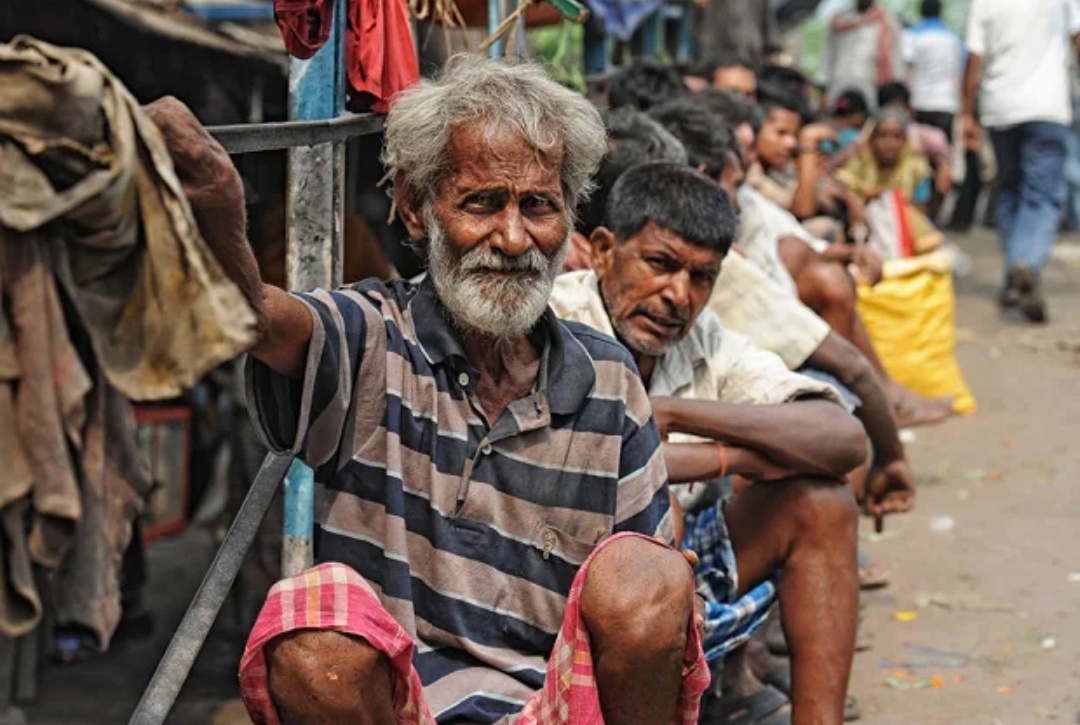
If you deeply analyze why, regardless of which party comes to power, they settle for saying ‘we gave these many things to the poor’ instead of ‘we will eradicate poverty’, four major things become apparent. The ‘Manufactured Dependency’ being created in the name of welfare makes a citizen who looks to the government for survival a more secure voter for the political system than a self-reliant citizen. If a citizen becomes economically stable and stands on his own feet – he starts questioning the government, demanding answers about roads, law and order, employment, and transparency. But if he is made to depend continuously on schemes, his attention revolves only around the fear of ‘Will the pension/allowance be credited next month or not?’. To permanently eradicate poverty in a society, quality education, world-class skills, establishment of industries, and provision of infrastructure are necessary. Making these possible takes decades and requires a long-term vision, but what political leaders need is a ‘five-year re-election cycle’. If results have to be visible within five years, instead of setting up industries, directly depositing some money into an account and publicizing ‘I fed you’ is politically the most profitable route. The category called the poor is necessary for political existence
If there are no poor people, the political mask of being a ‘savior of the poor’ has no value. For someone to say at campaign rallies, ‘I was born for the poor, I live for the poor’, one section must always remain in poverty. If poverty ends, not only does the political leader’s importance diminish, but the system also loses the opportunity to project itself as a ‘benefactor’.
From the perspective of the economy – if poverty were to completely disappear, the cheapest labor force available in the system (Unorganized Cheap Labor) would become scarce. For laborers to remain continuously available for construction, service sectors, and manual work, there is an invisible economic principle that the lower class in society must remain economically just barely above subsistence indefinitely. The right given by our Constitution is the ‘Right to Live with Dignity’. But what the system is getting us accustomed to is a ‘Subsidy Culture’. If a government is giving pulses, salt, and other essentials for free to people, that is not the success of that government. It is the government’s failure that the citizen is still in a position where he cannot afford to buy them himself. Until the voter develops the awareness to ask, ‘Instead of keeping us poor and giving us five hundred a month, what is the plan to ensure that we do not remain poor at all..??’, no matter which party comes to power, ‘poverty’ will continue as a business.