
The Supreme Court notice to the EC (SIR) should clearly explain what ‘Logical Discrepancy’ means.

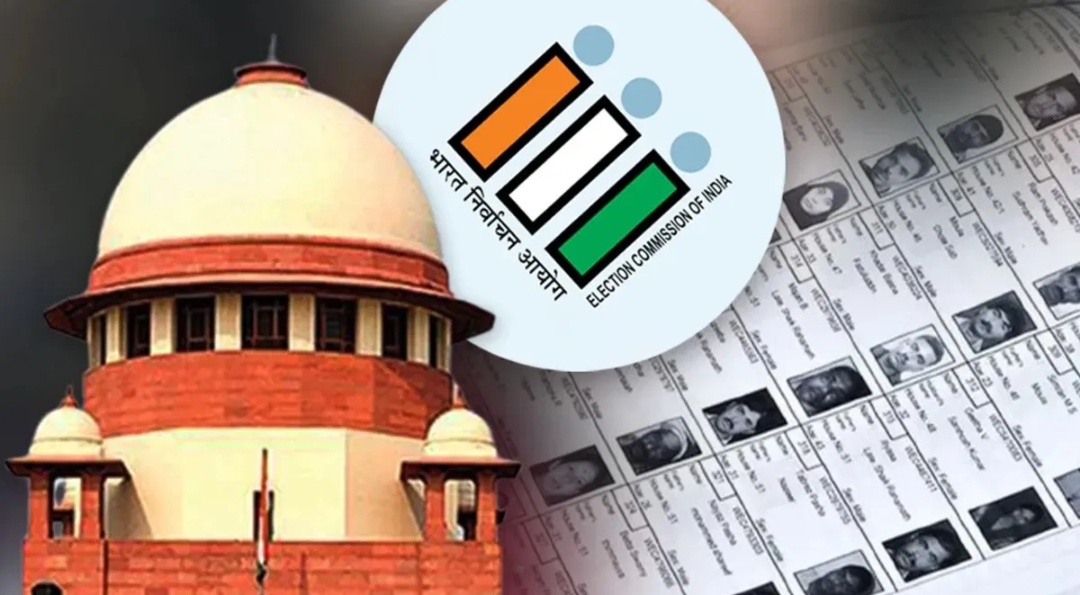
The Supreme Court expressed concern over the manner in which notices are being issued to voters as part of the Special Intensive Revision (SIR) process of electoral rolls. The bench questioned why, despite notices being issued to some voters under the name ‘Logical Discrepancy’, they do not clearly specify what issue needs to be explained. It observed that some notices appear to have been generated and issued mechanically, perhaps by a computer. A bench comprising Chief Justice of India Justice Suryakant, Justice Joymalya Bagchi, and Justice V Mohan recently heard petitions challenging the SIR notices. The petitions objected to the EC’s practice of placing voters on a ‘doubtful’ list and issuing notices on the grounds that there were discrepancies in their past records. The bench, which issued notices to the Election Commission in the matter, asked it to provide an explanation.
● What needs to be explained..??
The CJI suggested that voters should be clearly informed what ‘Logical Discrepancy’ means. He said that if a person had previously voted in one state and subsequently moved to another state, the notice should clearly specify what aspect of their voting details requires an explanation. He said that it is not enough to merely ask, ‘Have you voted currently or anywhere else? Clarify’; voters must be told in a way they can understand what exactly needs to be clarified. The Supreme Court suggested that Booth Level Officers (BLOs) should provide greater assistance to voters who receive notices. The bench said the process would become easier if BLOs could explain to people matters such as whether their names appear in old electoral rolls and what documents are available. The Supreme Court also suggested that the Election Commission prepare a list of frequently asked questions and answers on common doubts faced by voters regarding SIR. The CJI suggested making it available to the public through newspapers, websites, local bodies, and BLOs. He said this would be very useful to the public.
● Concern over notices to lakhs of people.
They questioned how daily-wage workers and ordinary people could respond to such notices. It was argued that the notices do not clearly state adequate reasons or the steps to be taken next. The bench was informed that if a small age difference between parents and children is shown as a ‘logical discrepancy’, there is no clarity on what documents voters should submit to prove it. It was stated that the 12 types of documents suggested by the Election Commission do not contain information that can establish such matters.
● We will not delete even a single vote without an inquiry.
Voters can submit the necessary explanations, and the list of documents is not exhaustive, ‘we will not delete even a single voter without an inquiry’. The notices provide details such as the name and mobile number of the BLOs to contact them. We are increasing staff to reduce the pending workload in the SIR process. However, the Supreme Court suggested that steps need to be taken to ensure that affected voters receive clear information and direct assistance from officials. The bench observed that since there are no elections in Delhi in the near future, there is time to rectify the shortcomings that have arisen in the process. It also directed that details of the immediate steps taken by the EC be placed before it.