

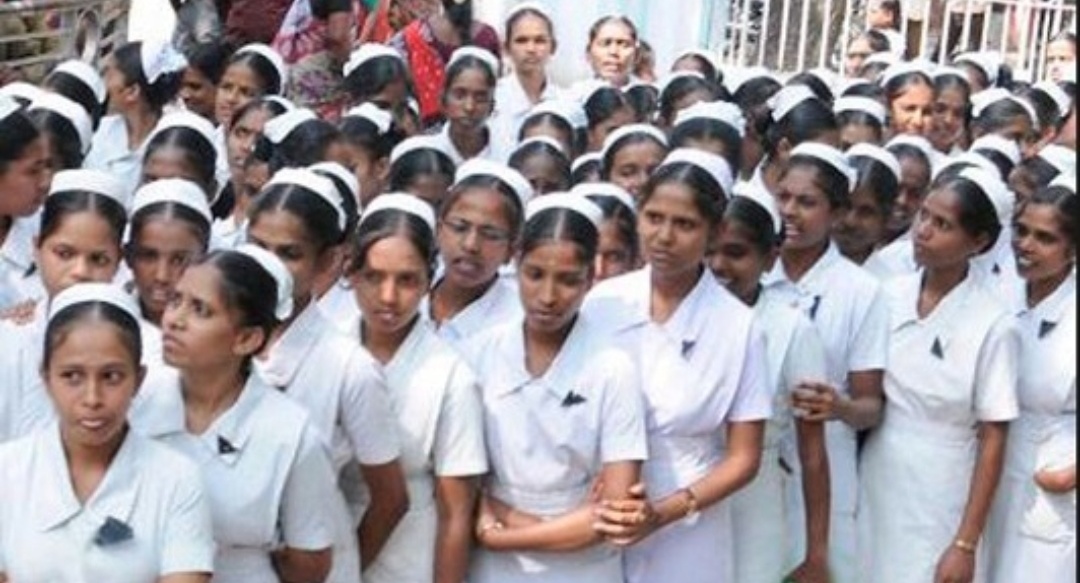
Nurses are often called ‘Mother After Mother’ because they care for patients with the same compassion and dedication as a mother. Their role in social service is immeasurable. Just as a mother holds a special place in a person’s life, nurses too occupy an equally important place. Celebrating May 12, the birth anniversary of Florence Nightingale, as International Nurses Day has become a tradition. Along with receiving their services, governments and society must also care for the welfare and safety of nurses. Protecting and supporting them is everyone’s responsibility. On this occasion, it is important to remember and recognize the services rendered by nurses across the country and in our state.
Nurses working in various cadres of the Health Department continuously provide healthcare services to the people. Staff nurses, ANMs, second ANMs, health assistants, MLHPs, personnel working in 104 and 108 emergency vehicles, government hospitals, area hospitals, PHCs, UPHCs, village and ward secretariats, and village health clinics are all striving to protect public health. In addition to them, an even larger number work in corporate and private hospitals and clinics.
● Same Work, Different Salaries.
Although all these nurses perform similar duties, there are huge differences in salaries, facilities, and security. Before 1990, governments used to appoint nurses in the public sector either permanently or on contract, and there was job security. After 1990, with the implementation of liberalization policies in the country, reforms began in the education and healthcare sectors as well. Permanent and contract appointments were gradually replaced by outsourcing, and both central and state governments introduced various schemes without guaranteeing employment security. As a result, even though nurses perform the same type of work, they do not receive equal pay. Governments often fail to allocate sufficient funds in their budgets for healthcare schemes, and even the allocated funds are diverted elsewhere. Because of this, nurses do not receive their salaries on time and suffer greatly. Some schemes were discontinued midway due to a lack of funding from the central government. Thousands of nurses working under those schemes lost their livelihoods and were pushed onto the streets. A good example is the Ayush scheme. Earlier, urban health centers were managed by state governments, but some were later handed over to private institutions like Apollo Hospitals. After some time, employees were removed from service. Nurses who had worked for 25 years became unemployed, unable to find alternative livelihoods.
● Most Nurses Are Working Women.
The majority of nurses are working-class women. Like many women workers, they too face gender-specific problems. In particular, the lack of leave during menstruation causes severe hardship. PHCs and UPHCs function 24/7, but due to staff shortages, nurses face immense pressure. A PHC is supposed to have four staff nurses, but many operate with only two or three. If one person takes leave, the remaining nurses are forced to work 12-hour shifts.
There is also no proper security for those working night shifts. Earlier, permanent attenders and watchmen were available to assist night-duty staff. However, after their retirement, the government has not filled those posts. As a result, the safety of nurses has become vulnerable. With the increase in drug abuse and criminal activities in the state, women’s safety has deteriorated further. Nurses working night shifts or late hours are increasingly facing sexual harassment.
● Need for Sexual Harassment Prevention Committees.
According to the 2013 Supreme Court ruling, Sexual Harassment Prevention Committees must be established at all levels in workplaces where men and women work together. However, governments have failed to implement this properly. At the very least, such committees should now be established without delay.
● Additional Burden Through Apps.
In the name of scientific and technological advancement, governments have introduced various mobile apps and imposed extra workloads on nurses by making them collect health and other data related to the public. Along with their regular duties, they are being forced to perform many unnecessary tasks.
Community Health Officers (CHOs) are pressured to remain in wellness centers from 9 a.m. to 8 p.m. If they fail to work until late hours, cuts are imposed on salaries and incentives. Due to the lack of transport facilities, they are forced to depend on private transportation, which creates unsafe conditions.
● Grand Dress Code, But Heavy Workload.
In corporate and private hospitals, nurses may have an impressive dress code, but salaries, working hours and other facilities are far from satisfactory. In many private hospitals, nurses are made to do duties unrelated to nursing. Proper leave is not granted, overtime wages are not paid, and salaries are often delayed. If nurses demand higher wages or ask for pending salaries, they are threatened, harassed or dismissed from jobs. Despite all these obstacles, nurses continue to risk their own health to save the lives of others. The same kind of intimidation that exists in the private sector is increasingly visible in government sectors too.
● One Theme Every Year.
Every year, a theme is announced on International Nurses Day. The theme for 2025 was ‘Our Nurses, Our Future – Caring for Nurses Strengthens Economies’. Although the theme strongly emphasized nurses health and safety, implementation has not matched the promises. The theme for 2026 has already been announced as ‘Empowering Nurses and Recognizing Their Key Role in Healthcare Systems’. Both central and state governments must frame policies according to these goals and allocate sufficient funds. Only by ensuring nurses’ health and job security can true empowerment of nurses be achieved. Governments should formulate action plans for both public and private healthcare sectors. To achieve these goals, nurses working across various cadres must unite and struggle collectively.
● Crucial Role in Public Health.
Alongside doctors, nurses play a vital role in protecting public health. Health experts have long recommended that central and state governments allocate at least six percent of the budget to the healthcare sector, but governments continue to ignore this demand. By giving unrestricted opportunities to corporate forces in education and healthcare, the public sector is being neglected. Due to inadequate funding and poor infrastructure, people are increasingly being pushed toward private hospitals. Governments have also given pharmaceutical companies excessive freedom, making healthcare and medicines increasingly expensive for ordinary people.