
The Divine Wedding of ‘Sita and Rama’ Amid Vedic Chants in Dakshina Ayodhya.
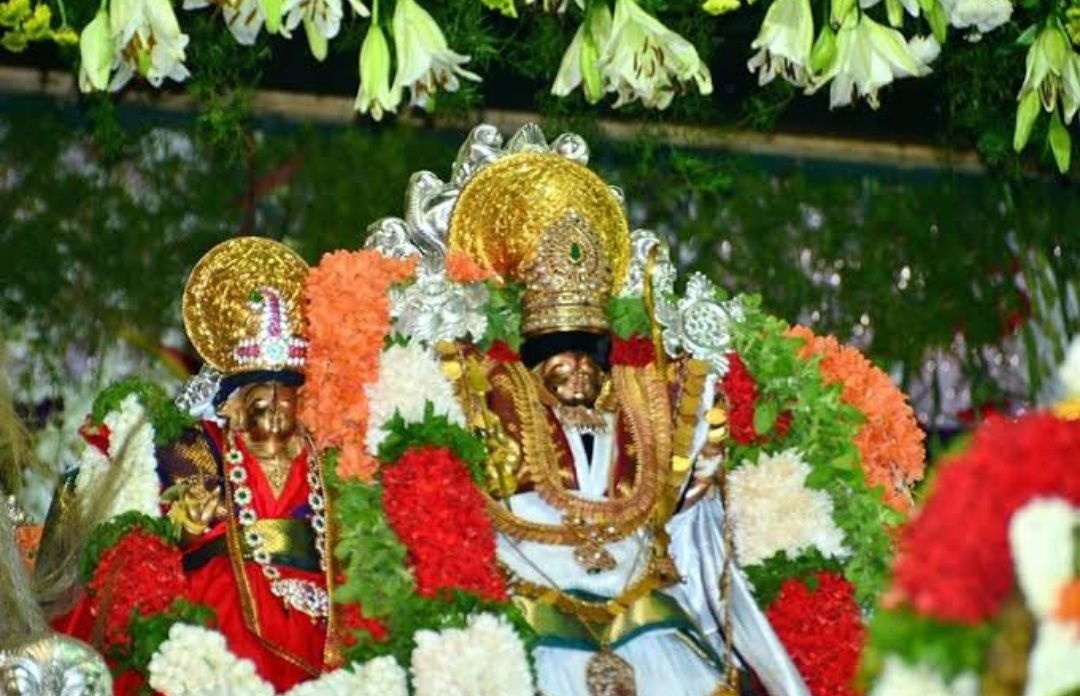
In the Treta Yuga, in the year named Vilambi, on the auspicious day of Chaitra Shuddha Navami, under Punarvasu Nakshatra and Abhijit Lagna, Lord Rama was born to Mother Kausalya. This sacred day is celebrated as Sri Rama Navami. According to the Brahma Purana, those who witness the celestial wedding of Sita and Rama at Bhadrachalam attain the merit equivalent to performing the Ashwamedha Yajna. Thus, Bhadrachalam, known as Dakshina Ayodhya, becomes the grand stage for this divine wedding.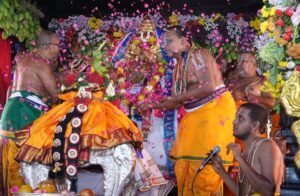
● Wedding on the Same Day as Birth.
According to the Pancharatra Agama, the wedding of a deity should be performed on the same day as their incarnation. Following this tradition, the wedding of Lord Rama is conducted on his birth day at Bhadrachalam. This practice was initiated by the devotee Bhadrachala Ramadasu and continues to this day. Temples across the world celebrate Sita-Rama Kalyanam on the same day as observed in Bhadrachalam.
During the recent celebrations held on a Friday, Chief Minister Revanth Reddy offered silk garments and pearl talambraal to the Lord. The Governor, Shiv Pratap Shukla, is scheduled to attend the Pattabhishekam ceremony on Saturday and offer silk garments. Heavy security arrangements with around 2,000 police personnel were made due to the presence of dignitaries.
● Unique Traditions and Significance.
Historically, the ruler Tanishah used to send offerings like gulal and silk garments every year for the wedding ceremony. This tradition continues even today. The wedding hall (Kalyana Mandapam) is of exceptional spiritual and architectural importance, and the talambraal used in the ceremony are considered extremely sacred by devotees.
● The Magnificent Kalyana Mandapam.
The Sita-Rama Kalyanam festival is celebrated with great grandeur every year, attracting lakhs of devotees. The Kalyana Mandapam is an extraordinary piece of sculpture and architecture.
Construction began in 1960 under the renowned sculptor Ganapati Sthapati. Green stone was brought from Dindivanam (Tamil Nadu), and black stone from nearby Tatakula Gudem. The platform features carvings of 50 marching elephants. The structure includes intricate lotus designs called Padma Jagatikam. Six-section pillars depict various divine scenes like Ramadasu’s devotion, Breaking of Shiva’s bow, Sita-Rama wedding rituals, Pattabhishekam, Krishna’s teachings (Gita Upadesa), Janaka’s Kanyadaanam
● The mandapam also features.
Stone chains carved from a single rock, Zodiac carvings on the ceiling, Sculptures of deities like Garuda, Lakshmi, Krishna, Saraswati, Sudarshana and others. A 9-ton monolithic lotus seat where the wedding is performed. This structure is called the ‘Shodasha Stambha Mandapam’ (16-pillared hall) and is considered a masterpiece of Indian temple architecture.
● Two Weddings in One Day.
Interestingly, the wedding ceremony is performed twice on Sri Rama Navami. Early morning (around 8–9 AM) inside the sanctum for the main deity. Later, a grand public ceremony at Mithila Stadium with processions, music, and Vedic chanting.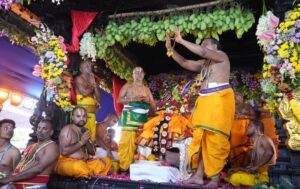
● What is Abhijit Muhurta?
According to scriptures, Lord Rama was born exactly at 12 noon. This time is considered highly auspicious (Abhijit Muhurta). During the wedding ceremony, the ritual of Jeelakarra Bellam (cumin-jaggery ritual) is performed precisely at noon.
● Three Sacred Mangalsutras.
Unlike typical weddings where two sacred threads (mangalsutra) are used, in Bhadrachalam, three are tied. On behalf of King Dasharatha (father-in-law). From King Janaka (bride’s father). By devotee Ramadasu, who regarded Sita as his own daughter
● Why Are Talambraal Red?
Usually, talambraal (rice used in weddings) are yellow due to turmeric. However, in Bhadrachalam, they are red. This tradition dates back to Tanishah, who, after realizing his mistake of imprisoning Ramadasu, sent offerings including gulal (colored powder). This gulal was mixed with the talambraal, giving them a red color. This tradition continues even today, with fragrant substances and colored powder added.
This passage beautifully highlights the spiritual, historical, and architectural grandeur of the Sita-Rama Kalyanam at Bhadrachalam, making it one of the most sacred and unique celebrations in India.